Climate Change refers to a change in global climate patterns apparent from the mid to late 20th century onwards, attributed largely to the increased levels of atmospheric carbon dioxide produced by the use of fossil fuels.
 |
- Global warming causes thermal expansion of land and water. It also
causes ice sheets to melt in icy regions of the world and mountain tops.
Large volumes of melted ice (water) then flows down into streams, rivers, lakes and seas. The result is rising sea and water levels, causing floods and massive destruction to low-lying towns and cities along water bodies. - Changing climate may also cause the weather to become more extreme, be it droughts or violent storms and heavy rain.

Extreme changes in temperature makes people suffer breathing difficulties, head aches, body rashes and other illnesses.
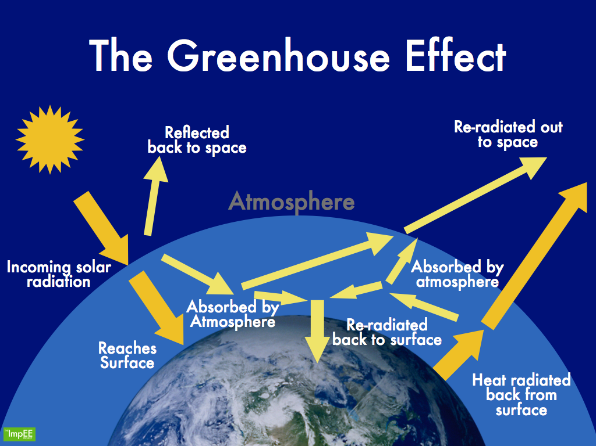
Greenhouse Effect
Definition: The trapping of the sun's warmth in a planet's lower atmosphere due to the greater transparency of the atmosphere to visible radiation from the sun than to infrared radiation emitted from the planet's surface.
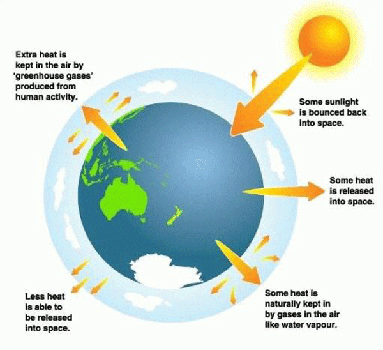
Greenhouse gases act like a blanket around Earth, trapping energy in the atmosphere and causing it to warm up. This phenomenon is called greenhouse effect and is natural and necessary to support life on Earth. However, the buildup of greenhouse gases can change Earth's climate and result to human health and welfare and to ecosystems.